
Desert Private Collection · Restoration Program
Classic Car Restoration: From Bare Metal to the Final Drive
Professional bodywork. PPG waterborne color. Carefully finished upholstery. Mechanical work that brings the whole car together.
At Desert Private Collection, our classic car restoration program brings body and paint, upholstery, and mechanical work into one project plan. Whether your goal is to revive a longtime family car, restore a favorite classic, or improve a car you want to drive more often, the work starts with understanding the vehicle and the result you want.
Discuss your restoration Call (760) 600-5284What does a classic car restoration involve? A restoration can include disassembly, removal of old finishes, corrosion and metal repairs, panel alignment, paint preparation and refinishing, interior work, mechanical repairs, reassembly, and testing. The scope depends on the car’s condition, your priorities, and the agreed budget.
01 / Establish the direction
Start with the car’s condition—and your vision
A restoration should have a clear purpose. A factory-style presentation, a comfortable weekend driver, and a thoughtfully modified classic each call for different decisions. Before discussing colors or materials, define how you plan to use the car and which original details matter to you.
Our program covers the core disciplines of bodywork, paint, upholstery, and mechanical work. The project scope should identify which of those areas need attention, which components can be preserved, and where further investigation is necessary. A complete restoration and a focused refurbishment are different projects.
Your car’s year, make and model; current photographs; any maintenance or restoration records; your preferred finish and interior direction; and your budget range. Include known problems and any parts already removed or purchased.
Disassembly may reveal issues that were not visible during the initial assessment. Build room into the plan for reviewing those findings before expanding the work. A realistic scope is more useful than a fixed promise made before the car has been examined.
02 / Reveal the foundation
Taking a classic car down to bare metal
For a bare-metal restoration, removing the old finish allows the underlying panels and previous repairs to be evaluated. Layers of paint and filler can conceal corrosion, distorted metal, or repairs that need attention before a new finish is applied.
The stripping method must suit the panel material, thickness, and condition. Aggressive treatment can damage thin panels; the goal is to uncover the surface while preserving usable material. Fiberglass, aluminum, and steel require different preparation decisions. “Bare metal” is not a universal instruction for every component on every classic.
Disassembly should follow the agreed scope, with trim, seals, glass, hardware, and interior components removed where necessary for access. Keeping parts identified and organized helps with fit checks, replacement decisions, and eventual reassembly.
Once exposed, the substrate needs appropriate preparation and protection under the selected refinishing system. Bare steel should not be left exposed simply to make a dramatic progress photograph.
03 / Restore shape and fit
Metal repair and professional bodywork
The quality of a finished car begins with the shape underneath its paint. Corroded or compromised metal needs assessment and an appropriate repair; covering it with filler does not restore its strength. Depending on condition, the plan may call for localized metal repair, fabricated sections, or replacement panels.
Door, hood, and trunk fit deserve attention before final paint. Panel gaps, body lines, latch operation, and the fit of adjacent trim all influence how the completed car looks and functions. Reproduction parts may require fitting rather than simply bolting into place.
After the metalwork is addressed, surface preparation refines the contours. Appropriate fillers and primers can be part of a professional system, but their use and sequence depend on the substrate and product instructions. Careful sanding and inspection help reveal uneven areas before color makes them more noticeable.
Ask to review repair areas before they are covered, panel alignment during trial fitting, and the condition of seams and mounting points. A glossy finish is only one part of judging restoration quality.
04 / Build the finish
PPG waterborne paint for a carefully prepared classic
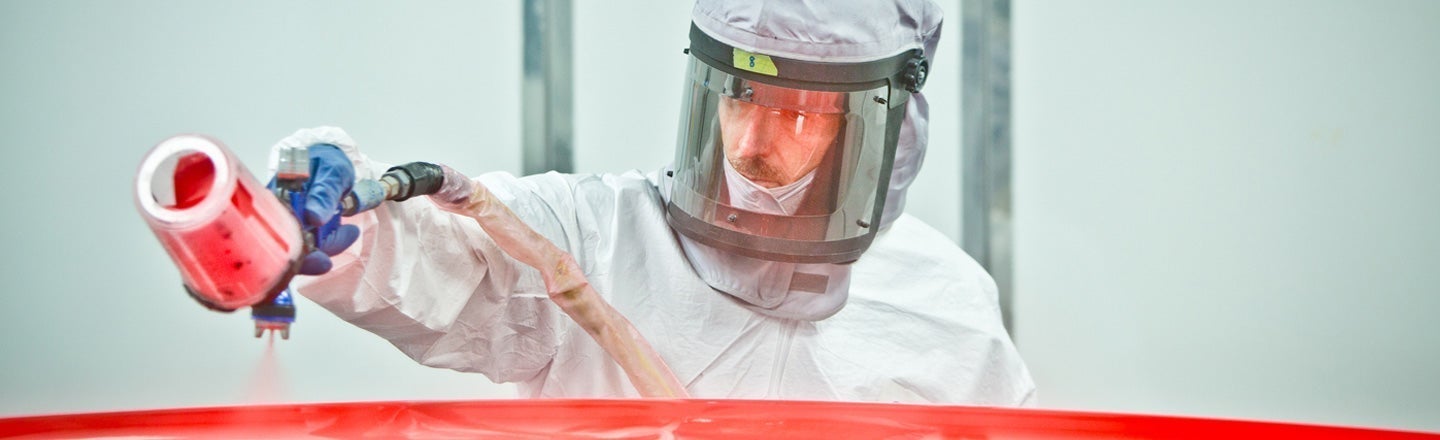
Our body and paint work uses PPG waterborne color. Often called “water-based paint,” this refers to the color basecoat within a compatible refinishing system. It does not mean that the primer, sealer, and clearcoat are all water-based, or that the basecoat is applied directly to untreated bare metal.
The paint plan brings together the correct substrate preparation, compatible undercoats, selected color, and clearcoat. Product selection, application, drying, and refinishing intervals must follow the current technical information for the exact products used. PPG publishes separate guidance for preparation, priming, basecoat, clearcoat, and polishing in its waterborne-system resources.
Choose the color before the final application
Decide whether the goal is a factory-style color, a period-inspired choice, or a custom finish. Review a spray-out sample under suitable lighting before final approval. Color codes provide a starting point; the appearance of a sample helps you evaluate the actual direction.
Allow time for the finish to develop
The finished surface depends on preparation and the complete paint system. Drying, curing, and any sanding or polishing need to follow the selected products and intended finish. Ask for aftercare guidance specific to that system before washing, waxing, covering, or applying protective film to newly refinished surfaces.
05 / Restore the cabin
Classic car upholstery with a coordinated finish
Upholstery restoration should bring the interior together as a whole. Seat coverings, cushions, carpets, door panels, headliner, and trim need to work with the car’s design and the level of restoration you have chosen. Recovering a seat alone will not correct a damaged frame or worn support beneath it.
Our upholstery work can be planned around preserving a period appearance or creating a personalized interior. Before materials are ordered, review the proposed color, grain, pattern, stitching, piping, and fit. Make the distinction between an original-style restoration and a custom interior clear from the start.
Access also matters. Wiring, insulation, floor repairs, and other work behind the finished interior should be coordinated before new trim is installed. That sequencing helps avoid disturbing completed upholstery to reach an unfinished job.
Appearance
Coordinate material samples, colors, patterns, and trim details before fabrication.
Comfort
Assess seat support, cushioning, seating position, and the condition of the underlying frame.
Fit and function
Check panel fit, controls, seat movement, and access to the equipment behind the trim.
06 / Bring the systems together
Mechanical restoration beyond the engine bay
A classic car should be evaluated as a complete machine. Mechanical work may involve the engine and transmission, but also the systems that help it start, stop, steer, cool, and operate consistently. The scope should follow inspection findings and intended use.
| System | Questions the assessment should answer |
|---|---|
| Engine and driveline | What do starting behavior, running condition, leaks, shifting, and appropriate diagnostic checks indicate? |
| Brakes and steering | Which components need repair, renewal, adjustment, or further inspection? |
| Suspension and tires | Are wear, mounting condition, tire suitability, and alignment consistent with the planned use? |
| Fuel and cooling | Are storage-related deterioration, leaks, fuel delivery, or temperature-control concerns present? |
| Electrical and accessories | Do wiring, charging, starting, lights, instruments, and agreed accessories operate correctly? |
A complete engine rebuild is not automatically required because a car is being repainted or retrimmed. Equally, a clean engine compartment does not establish mechanical health. Base repair decisions on diagnosis, records, and the objectives of the project.
Watch the process
Preparation and paint: PPG demonstration videos
These manufacturer demonstrations help explain two refinishing stages. They are educational references from PPG Refinish UK, not footage of our shop. Exact products and procedures for a restoration depend on the local paint system and current technical instructions.
Primer filler preparation
Waterborne basecoat application
Source: PPG Refinish Distribution’s process-video library . Direct links are provided if your browser or the video owner restricts embedded playback.
07 / Complete and evaluate
Reassembly, finish review, and the final drive
Reassembly brings the restored systems and surfaces together. Trim, seals, glass, lights, interior pieces, and hardware need careful fitting, with fresh finishes protected throughout the work. Small details can have a large effect on the completed car.
The final review should cover the work performed: panel and trim fit, finish consistency, interior operation, lights and instruments, fluid leaks, and the mechanical items included in the scope. Where the car is safe and ready to drive, appropriate road testing can help identify adjustments that a stationary inspection will miss.
At handover, review the completed work, any remaining recommendations, and the care or break-in instructions that apply. Newly rebuilt components may have specific follow-up requirements. A restoration is easier to understand and maintain when the owner knows what was renewed, what was preserved, and what to monitor next.
Planning your classic car restoration
How much does a classic car restoration cost?
The starting condition and scope determine the budget. Metal repairs, parts availability, paint preparation, interior choices, and mechanical needs all affect the work. Request a vehicle-specific assessment, an itemized scope, and a clear method for approving additional work.
How long does the process take?
Timing depends on the depth of restoration, discovered damage, parts lead times, specialist work, and refinishing requirements. Agree on realistic milestones after the car and scope have been reviewed.
Does every car need a bare-metal restoration?
No. A sound existing finish or historically significant original material may justify a preservation approach. Bare-metal preparation is appropriate when the project calls for it; the decision should follow condition assessment and the owner’s goals.
Can I restore the body and interior without rebuilding everything?
A focused scope may be appropriate. Body and paint, upholstery, and mechanical work can be assessed separately, then coordinated so that necessary work happens in the right order.
Desert Private Collection Tel: (760) 600-5284, 43160 Madison St, Indio, CA 92201 |  Copyright © 2026 Goxee Dealer. All rights reserved. Privacy Policy |